Meningitis is an
infection of the coverings around the brain and spinal cord.
The
infection occurs most often in children, teens, and young adults. Also at risk
are older adults and people who have long-term health problems, such as a
weakened
immune system.
There are two main kinds
of meningitis:
Viral meningitis is fairly common. It usually
does not cause serious illness. In severe cases, it can cause prolonged fever
and seizures.
Bacterial meningitis is not as common but is very
serious. It needs to be treated right away to prevent brain damage and
death.
The two kinds of meningitis share the same symptoms. It’s
very important to see a doctor if you have symptoms, so that he or she can find
out which type you have.
What causes meningitis?
Viral meningitis is
caused by viruses. Bacterial meningitis is caused by bacteria.
Meningitis can also be caused by other organisms and some medicines, but
this is rare.
Meningitis is contagious. The germs that cause it
can be passed from one person to another through coughing and sneezing and
through close contact.
What are the symptoms?
The most common symptoms
among teens and young adults are:
A stiff and painful neck, especially when you
try to touch your chin to your
chest.
Fever.
Headache.
Vomiting.
Trouble
staying awake.
Seizures.
Children, older adults, and people with other medical
problems may have different symptoms:
Babies may be cranky and refuse to eat. They
may have a rash. They may cry when held.
Young children may act
like they have the flu. They may cough or have trouble
breathing.
Older adults and people with other medical problems may
have only a slight headache and fever.
It is very important to see a doctor right away if you or
your child has these symptoms. Only a doctor can tell whether they are caused
by viral or bacterial meningitis. And bacterial meningitis can be deadly if not
treated right away.
How is meningitis diagnosed?
Your doctor will ask
questions about your health, do an exam, and use one or more tests.
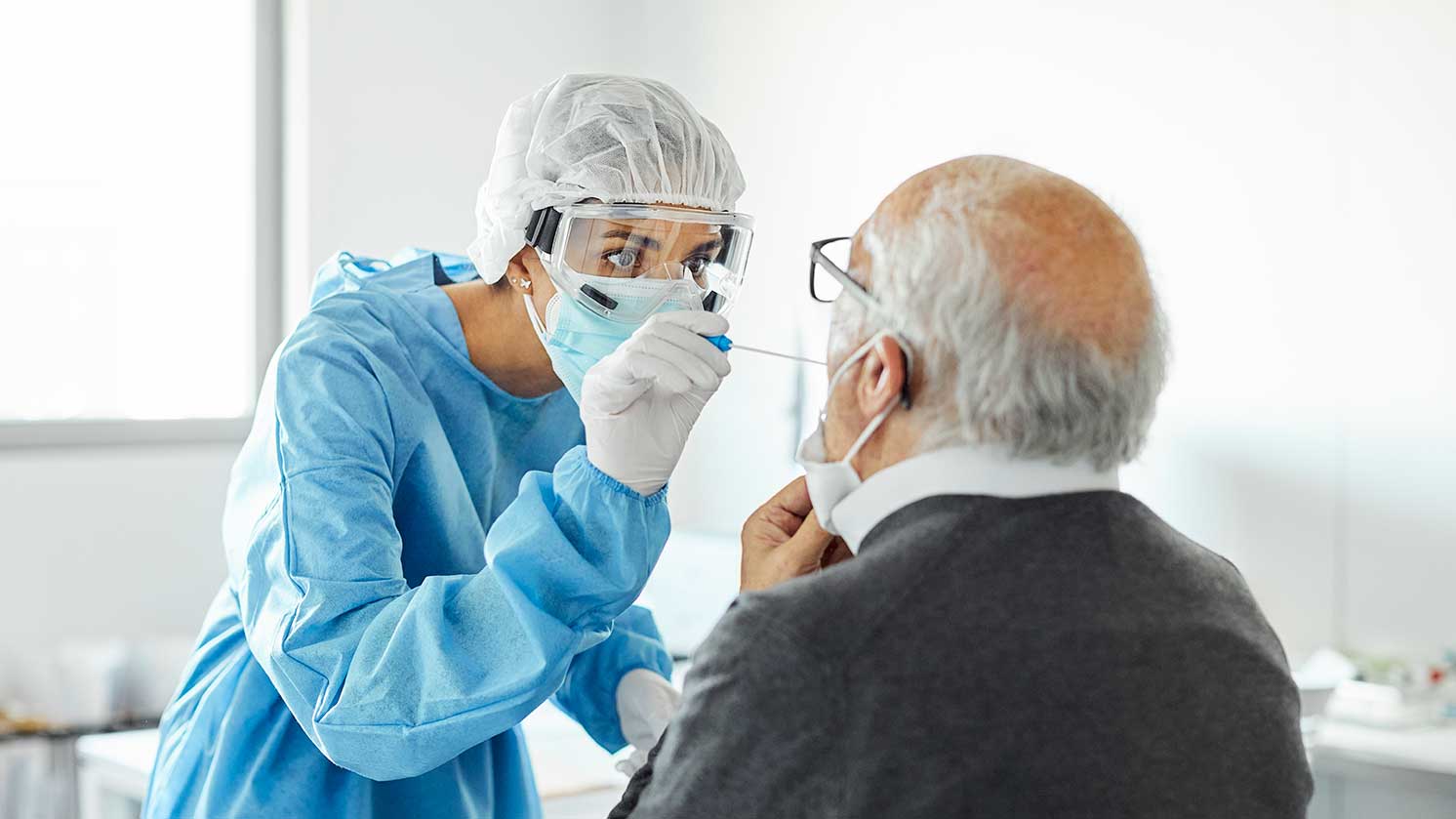
Lumbar puncture is the most important lab test for
meningitis. It is also called a spinal tap. A sample of fluid is removed from
the spine and tested to see if it contains organisms that cause the illness.
Treatment depends on the cause.
See your doctor right away if you or your child has symptoms, because bacterial
meningitis can be deadly if not treated right away.
Bacterial
meningitis is treated in a hospital. You or your child will get antibiotics.
And you will be watched carefully to prevent serious problems such as hearing
loss, seizures, or brain damage.
But viral meningitis is more
common, and most people with this form of the illness get better in about 2
weeks. With mild cases, you may only need home treatment. Home treatment
includes drinking lots of fluids and taking medicine for fever and pain.
Can meningitis be prevented?
The best way to
protect your child from meningitis is to make sure he or she gets all the
standard immunizations for children. These include shots for measles,
chickenpox, Haemophilus influenzae type B (Hib) disease,
and pneumococcal infection.
Talk to your doctor about whether you
or your child also needs the meningococcal vaccine, which is a shot to prevent
bacterial meningitis. It is recommended for:
Adolescents ages 11 and 12.
Teens ages 13 to 18 who haven't had the shot yet. (They should
get it as soon as possible.)
College freshman living in
dormitories.
People who plan to travel to countries known to have
meningitis outbreaks.
Meningitis is a disease that can be
passed from person to person (contagious). It is caused most often by viruses
or bacteria that infect the tissues (meninges) and sometimes the fluid
(cerebral spinal fluid, or CSF) that surround the brain and spinal cord.
Viral meningitis
Enteroviruses are the most common cause of viral
meningitis. They can live in your
intestines without causing illness. But they can cause
meningitis when they are passed from one person to another through food, water,
or contaminated objects. Meningitis caused by enteroviruses occurs most often
in babies and young children.
In the United States, bacterial meningitis mainly affects
adults.1 Immunizations continue to help prevent
childhood bacterial meningitis. Most people who get bacterial meningitis get it
from one of two types of bacteria:
Streptococcus pneumoniae or
Neisseria meningitidis.2
These bacteria often live in the body, most
often in the nose and throat, without causing illness. But the bacteria can
cause meningitis if they get into the bloodstream and travel to the
cerebrospinal fluid or the tissues (meninges) that
surround the brain and spinal cord. These bacteria also can be passed from one
person to another, usually through infected saliva or mucus.
Two
other bacteria that sometimes cause meningitis are
group B streptococci and
Listeria monocytogenes.
Meningitis caused by group B streptococci bacteria occurs most often in
newborns, who can become infected during or after birth. Meningitis caused by
Listeria monocytogenes bacteria occurs most often in
newborns and in older adults.
The Centers for Disease Control and
Prevention (CDC) recommends screening for group B streptococci in all pregnant
women at 35 to 37 weeks. Women who have the bacteria are given antibiotics
during labor in order to prevent infection in their newborns, and this practice
has worked well.3
In rare cases, other
bacteria cause meningitis, usually in people with long-term medical
conditions.
Meningitis also can be caused by
other organisms and conditions. It can be a
complication of an illness, an injury (particularly to the skull or face), or
brain surgery.
How meningitis is spread
Organisms that cause
meningitis can be passed from one person to another or passed from rodents and
insects to people. But exposure to an organism that causes meningitis does not
mean you will get the infection.
Organisms can be passed from one
person to another:
During birth. A mother can pass organisms
that cause meningitis to her baby even if the mother does not have symptoms.
Delivering a baby by cesarean section rather than through the birth canal does
not always protect the baby from getting the infection. Both bacteria and
viruses can be transmitted this way.
Through stool. Stool could
have enteroviruses or certain types of bacteria in it.
Washing hands on a regular basis can help prevent you
and your children from getting infected this way. More children than adults get
meningitis this way.
Through coughing and sneezing. Infected people
can pass certain bacteria that are normally found in saliva or mucus in their
noses and throats.
Through kissing, sexual contact, or contact
with infected blood. The human immunodeficiency virus (HIV) also can cause
meningitis and can be passed from an infected person to another person through
blood or sexual contact but not through kissing.
In rare cases, some organisms that cause meningitis
can be passed to people from rodents and insects. The most common of these are
arboviruses (including the St. Louis encephalitis and West Nile viruses), which
are transmitted through dust and food contaminated by the urine of infected
mice, hamsters, and rats.
Symptoms of bacterial
meningitis usually appear suddenly. Symptoms of viral
meningitis may appear suddenly or develop gradually over a period of days. For
example, the symptoms of viral meningitis after mumps may take several days or
weeks to develop.
The most common symptoms of either form of
meningitis include:
Fever.
Severe and persistent
headache.
Stiff and painful neck, especially when trying to touch
the chin to the chest.
Vomiting.
Confusion and
decreased level of consciousness.
Seizures.
Other symptoms of meningitis include:
Sluggishness, muscle aches and weakness, and
strange feelings (such as tingling) or weakness throughout the
body.
Eye sensitivity and eye pain from bright
lights.
Skin rash.
Dizzy spells.
The incubation period—the time from exposure to the
infection to when the first symptoms develop—depends on the type of organism
causing the infection.
Babies, young children, older adults, and
people with other medical conditions may not have the usual symptoms of
meningitis.
In babies, the signs of meningitis may be a
fever, irritability that is difficult to calm, decreased appetite, rash,
vomiting, and a shrill cry. Babies also may have a stiff body and bulging soft
spots on their heads that are not caused by crying. Babies with meningitis may
cry when handled.
Young children with meningitis may act like they
have the
flu (influenza), cough, or have trouble
breathing.
Older adults and people with other medical conditions
may have only a slight headache and fever. They may not feel well and may have
little energy.
The course of
meningitis often depends on your age, general health,
and the organism causing the infection. The illness can range from mild to
severe.
Viral meningitis is more common in the late summer and
early fall. It usually does not cause serious illness. But it is important to
see your doctor if symptoms of meningitis develop so that he or she can rule
out bacterial meningitis, which is more serious. With mild cases of viral
meningitis, you may need only home treatment and can recover within 2 weeks.
But some people may feel light-headed and tired for several months after the
illness.
Bacterial meningitis occurs most often from late winter
to early spring. It usually causes serious illness and can be life-threatening.
The symptoms of bacterial meningitis usually develop suddenly and last for 2 to
3 weeks. A person with bacterial meningitis is treated with antibiotics in a
hospital.
Complications during illness and
long-term complications are more common with bacterial
than with viral meningitis. Newborns and young children with bacterial
meningitis, people with
impaired immune systems, and older adults with
long-term medical conditions are more likely than others to develop immediate
and/or long-term complications of meningitis.
People who have
bacterial meningitis run the risk of death if they are not treated promptly.
Newborns, children younger than 2, older adults, or people with weakened immune
systems are at a greater risk of death than other people.
The
likelihood of death from bacterial meningitis in adults is highest in those who
are older than 50, have seizures during the first 24 hours of illness, delay
getting treatment, are in a coma when admitted to the hospital, are in shock,
or cannot breathe without help from a machine.2 Most
survivors recover completely.4
Meningitis caused by Streptococcus (S.) pneumoniae is more likely to cause death than meningitis caused by other
bacteria.2 Getting the
pneumococcal conjugate vaccine (PCV)(What is a PDF document?) usually protects people from diseases
(including meningitis) caused by most strains of the bacteria.
Factors that may increase
the risk for
meningitis include:
Genetics. Some people may inherit the tendency
to get meningitis. If they come in contact with organisms that can cause the
infection, they may be likely to get infected.
Being male. Males
get meningitis more often than females.
Age. In general, babies,
young children, young adults, and older adults are at highest risk of getting
meningitis.
Crowded living conditions. People in camps, schools,
and college dormitories are more likely than others to get meningitis caused by
organisms that can spread easily from one person to another. For example:
College freshmen. Freshmen who live in
dormitories have a slightly greater chance of getting meningitis compared with
other people their age. However, the risk in college students overall is as low
as in people their age who are not going to college.
Children
attending day care centers. Children who attend day care centers are more
likely than other children to get meningitis caused by organisms that are
easily spread through stool or contaminated hands or water.
Exposure to insects and rodents. People who live
in or visit areas of the world where insects or rodents carry organisms that
cause meningitis risk getting the disease.
Being an older adult who has not gotten the pneumococcal
polysaccharide (PPSV) immunization and/or does not have a working spleen, which
is part of the body's
immune system.
Travel to areas where
meningitis is common. For example, people traveling to the "meningitis belt" in
sub-Saharan Africa should receive the meningococcal vaccine.
Medical conditions that increase the risk of meningitis
include:
Poor overall health. People who are in poor
health or have other medical conditions may be more likely to get meningitis
because their bodies' natural defenses may be weak. For example, children who
have
sickle cell disease or cancer are at higher risk than
other children.
Having a birth defect of the skull, a head injury,
or brain surgery.
Having treatment with a kidney dialysis
machine.
Having other infections, such as upper respiratory
infections, mumps, tuberculosis (TB), syphilis, Lyme disease, and illnesses
caused by herpes viruses.
Having a
cochlear implant for severe hearing loss. A recent
study indicates that children with cochlear implants have an increased risk for
bacterial meningitis.5
Being born to a mother infected with an organism that causes
meningitis. Viruses such as the enteroviruses and herpes viruses, and some
bacteria can be passed from an infected mother to a baby during
birth.
Having had meningitis in the past. Some people who have had
meningitis are more likely than others to get it again. These include people
with birth defects or injuries to their skull and face,
impaired immune systems, or unexpected reactions to
some medicines.
Call 911 or other emergency services immediately if:
You or your child has symptoms of severe
meningitis, such as fever, seizures, and
confusion.
Your baby has signs of severe meningitis such as trouble
breathing or fever with a bulging soft spot on the head not caused by
crying.
Call your doctor immediately
if:
You or your child has symptoms or signs of
meningitis, such as severe and persistent headache, stiff neck, fever, rash,
nausea, and vomiting.
You or your child has viral meningitis and
does not get better with home treatment after 3 days.
You or your
child is being treated for viral meningitis and develops signs of
complications during illness (for example, a fever
that lasts longer than 3 full days and does not go down during home
treatment).
Your baby has a fever that comes and goes, diarrhea,
vomiting, swollen abdomen, and a shrill cry.
Call a doctor promptly if you believe you may have been
exposed to meningitis. You can be treated with
antibiotics, which may keep you from getting the
illness.
Watchful Waiting
Watchful waiting is a period of time during
which you and your doctor observe your symptoms or condition without using
medical treatment. Bacterial meningitis, especially in a newborn, is a medical
emergency. Watchful waiting is not appropriate if you think that you or your
child has meningitis, especially because you will not know whether the
infection is bacterial or viral. Call your doctor as soon as symptoms or signs
appear.
Who To See
The following health professionals can diagnose and treat
meningitis:
Your doctor will almost always do
a
lumbar puncture test (also known as a spinal tap) if
he or she thinks you have meningitis.
A lumbar puncture takes
samples of the fluid around the spine and brain, known as cerebral spinal fluid
(CSF). A
culture of the spinal fluid is done to check for
organisms known to cause illness. It often takes several days to several weeks
to get results from a spinal fluid culture. But other tests also can be done on
the spinal fluid to determine which organism is causing the infection. The
results of these tests may be ready before the results of a culture.
Other tests
A doctor also may do the following
tests to see if there are other causes for your symptoms:
Treatment for
meningitis depends on the organism causing the
infection, your age, the extent of the infection, and the presence of other
medical conditions or
complications of meningitis.
Most people
with viral meningitis usually start getting better within 3 days of feeling
sick and recover within 2 weeks. But it is important to see your doctor if
symptoms of meningitis develop so that he or she can rule out bacterial
meningitis, which is more serious. With mild cases of viral meningitis, you may
only need home treatment, including fluids to prevent dehydration and medicine
to control pain and fever. If you do not get better or if symptoms get worse,
you may need further testing to check for other causes of illness.
Bacterial or severe viral meningitis may require treatment in a hospital,
including:
Antibiotics. These medicines usually
are given through a vein (intravenously, or IV) to treat meningitis.
Antibiotics are given only when bacteria are causing the infection. Giving
antibiotics when they are not needed may cause
drug resistance.
Measures to reduce
pressure within the brain. If meningitis is causing pressure within the brain,
corticosteroid medicines such as dexamethasone may be
given to adults or children.
Measures to reduce fever. Medicines
such as
acetaminophen (Tylenol), fluids, and good room
ventilation reduce fever. If you have a high fever, you also may need a device
such as a cooling pad placed on the bed.
Measures to prevent
seizures. If you have seizures, your surroundings will be kept quiet and calm.
Medicines such as phenobarbital or dilantin can help stop seizures. For more
information, see the topic
Seizures.
Oxygen therapy. Oxygen may be given if you have trouble breathing
and to increase the amount of oxygen in all parts of the body. Oxygen may be
delivered by a hood or tent placed over the body, a face mask placed over the
nose and mouth, a nose piece (nasal cannula) held loosely under the nose, or,
in severe cases, a tube through the mouth into the trachea
(windpipe).
Monitoring fluids. You may need to drink extra liquids
because infections increase the body's need for fluids. Increasing liquids also
reduces the possibility of
dehydration. Liquids are given into a vein (IV) if you
have an infection and are vomiting or are not able to drink enough. Doctors
control the amount of fluids given because people with meningitis may develop
problems if they have too much or not enough fluid.
Monitoring
blood chemicals. Frequent blood tests are done to measure essential body
chemicals, such as sodium and sugar in the blood.
A person who has severe meningitis may need to be treated
in the intensive care unit (ICU) of a hospital. Doctors watch the person
closely and provide care if needed. See the Other Treatment section of this
topic for more information on intensive care in a hospital.
What To Think About
Most healthy adults who have
recovered from meningitis do not need follow-up care. But adults who have
existing medical conditions that make them more likely than others to develop
long-term complications or get meningitis again should see their doctors after
recovery. Babies and children treated for meningitis always need follow-up care
after recovery and need to be checked for long-term complications such as
hearing loss.
Immunization against some of the organisms
that can cause
meningitis is the most effective way to prevent the
illness. Some causes of meningitis that can be prevented by vaccines include:
Measles, mumps, and rubella viruses. The
measles, mumps, and rubella (MMR) vaccine(What is a PDF document?) is routinely given to children between 12
months and 15 months of age and again at 4 to 6 years of
age.
Varicella (chickenpox) virus. Two doses of the
chickenpox vaccine(What is a PDF document?) are recommended for children, the first at 12 to 15 months
and the second at 4 to 6 years old. Older children, teens, and adults who have
not had chickenpox can also get immunized.
Haemophilus influenzae type b (Hib) virus.
Hib vaccine(What is a PDF document?) is recommended for all children between 2 months and 5 years
of age and anyone older than 5 who has a medical condition such as
sickle cell disease or an
impaired immune system.
Neisseria meningitidis and Streptococcus pneumoniae bacteria. Immunizations against these bacteria are
recommended for people who have medical conditions such as impaired immune
systems or people who have had meningitis in the past. The
meningococcal vaccine (MCV4)(What is a PDF document?) helps protect against certain strains of
neisseria meningitidis. The Centers for Disease Control
and Prevention (CDC) recommends this vaccine for adolescents and for college
freshman living in dormitories. Adolescents should get this shot at age 11 or
12. Teens ages 13 to 18 who haven't had the shot should get it as soon as
possible.6 This vaccine also may be given to others
who may be at higher-than-normal risk, such as travelers to countries known to
have outbreaks of meningitis, people without a spleen, and those with
HIV. Routine vaccination with
pneumococcal conjugate vaccine (PCV)(What is a PDF document?) is recommended for children ages 2 and
younger to help prevent infection from Streptococcus pneumoniae.
College students
Although college students' overall risk of meningitis from
Neisseria meningitidis bacteria is low, freshmen,
especially those who live in dormitories, have a moderately higher risk than
other people their age.6 If you are a college freshman
living in a dormitory, the CDC recommends the meningococcal vaccine (MCV4).
College freshmen who do not live in dormitories may also be vaccinated to
reduce their risk of infection.6
Cochlear implants
An association has been found
between meningitis and
cochlear implants for severe hearing loss. To help
protect against meningitis from Streptococcus pneumoniae, experts recommend that people with cochlear implants get the
pneumococcal conjugate vaccine (PCV). Also, some people with implants have ear
infections before they get meningitis, so people with implants should receive
prompt antibiotic treatment for ear infections.
Breast-feeding
Breast-feeding may protect
children ages 2 to 5 months against meningitis caused by Haemophilus influenzae type b (Hib) bacteria. But it is still
important to give breast-fed babies the Hib vaccine.
For more information about immunizations, see the
topic
Immunizations.
Reduce your risk
You can take steps to reduce your
risk of infection and prevent the spread of meningitis by:
Avoiding people who have
meningitis.
Separating people with meningitis from other people in
the home.
Washing your hands often if you have meningitis or are
caring for someone with meningitis. Wash your hands after using the toilet or
helping a sick child use the toilet, after changing a sick baby's diaper, and
after handling used bedsheets, towels, clothes, or personal items of a person
who has meningitis.
Avoiding insects and rodents that carry
organisms that cause meningitis. If you live in or visit an area of the world
where there are insects (such as mosquitoes and ticks) and rodents (such as
mice and rats) that carry organisms that cause meningitis, take steps to avoid
contact with them. For example, use insect repellent and keep all rodents out
of your home and other buildings.
If you come in close contact with someone who has
bacterial meningitis, taking antibiotics may keep you from getting the illness.
For example, a person who has come in contact with the saliva or mucus of
someone with meningitis caused by Neisseria meningitidis
bacteria may be given the antibiotics ciprofloxacin, ceftriaxone, or rifampin.
Ciprofloxacin is not usually used in people younger than 16 years of age or in
pregnant women. Rifampin also is not recommended for pregnant women.
If you have only casual contact with someone who has meningitis, for
example at school or at work, you do not need to take antibiotics.
Home treatment usually is all that is
needed for most people who have viral
meningitis. It includes:
Resting. Rest promotes healing and provides
relief from symptoms such as headache. Quiet activities, such as reading books,
playing board games, watching videos, or listening to music, help pass the
time.
Reducing fever. Sometimes no
treatment is needed for fever. Cool washcloths to the forehead, cool baths, and
medicines such as acetaminophen (Tylenol) or ibuprofen (Advil) can be used to
reduce fever. For more information on fever, see the topics
Fever, Age 11 and Younger and
Fever, Age 12 and Older.
Relieving minor
pain. Headache is a common symptom of meningitis. Some people also have muscle
aches and pains. Minor pain usually can be relieved with medicines such as
acetaminophen (Tylenol) or ibuprofen (Advil).
Preventing
dehydration. Common signs of dehydration include a
dry, sticky mouth and urinating only small amounts of dark-colored urine. You
can prevent dehydration by drinking extra liquids such as water, juices, teas,
and
rehydration drinks. Children may enjoy frozen juice
bars or snow cones. If a person vomits, he or she needs to avoid solid food and
take frequent small sips of water or other liquids.
Watching for
signs of
complications during illness. The most common
complications include fever lasting for longer than expected and seizures. Some
people with complications during illness may need to be treated in a
hospital.
Home treatment also is necessary after recovery. It is
important to look for signs of
long-term complications of meningitis, such as hearing
loss.
The decision about what medicine to use depends on the
organism causing the infection, the extent of the infection, and the person's
age and general health.
Medicines to treat fever and
muscle aches. The most commonly used medicines are
nonsteroidal anti-inflammatory drugs (NSAIDs) and
acetaminophen (Tylenol). Common side effects include nausea or upset stomach.
Also, NSAIDs may cause ringing in the ears and blurred vision.
What To Think About
Your doctor will want to know
which bacterium is causing your infection before prescribing antibiotics. A
sample of spinal fluid or blood is tested to find out about the
organism.
The type of antibiotic used and the length of treatment
depend on the bacteria, the extent of the infection, your age, and how likely
you are to develop severe meningitis or
complications during illness. Often two antibiotics
are given together, such as ampicillin and gentamicin sulfate.
Oxygen therapy, to help ease breathing
and reduce the amount of work on the heart. A
pulse oximeter often is used to measure the amount of
oxygen in the blood. In addition, if people are too sick to breathe on their
own, they may need a machine called a
ventilator.
Suctioning, to remove
mucus from the bronchial tubes. A small plastic tube
is inserted into the mouth or nose. The tube is attached to a machine that
gently sucks out mucus. Other treatments, such as breathing exercises and
massage, also can be used to remove mucus.
Liquids given through a
vein (intravenous, or IV). Sometimes people are too sick to drink
liquids.
National Institute of Neurological Disorders and
Stroke
P.O. Box 5801
Bethesda, MD 20824
Phone:
1-800-352-9424 (301) 496-5751
TDD:
(301) 468-5981
Web Address:
www.ninds.nih.gov
The National Institute of Neurological Disorders and
Stroke (NINDS), a part of the National Institutes of Health, is the leading
U.S. federal government agency supporting research on brain and nervous system
disorders. It provides the public with educational materials and information
about these disorders.
Centers for Disease Control and Prevention
(CDC)
1600 Clifton Road
Atlanta, GA 30333
Phone:
1-800-CDC-INFO (1-800-232-4636)
TDD:
1-888-232-6348
E-mail:
cdcinfo@cdc.gov
Web Address:
www.cdc.gov
The Centers for Disease Control and Prevention (CDC) is
an agency of the U.S. Department of Health and Human Services. The CDC works
with state and local health officials and the public to achieve better health
for all people. The CDC creates the expertise, information, and tools that
people and communities need to protect their health—by promoting health,
preventing disease, injury, and disability, and being prepared for new health
threats.
KidsHealth for Parents, Children, and
Teens
10140 Centurion Parkway North
Jacksonville, FL 32256
Phone:
(904) 697-4100
Fax:
(904) 697-4125
Web Address:
www.kidshealth.org
This Web site is sponsored by the Nemours Foundation. It
has a wide range of information about children's health, from allergies and
diseases to normal growth and development (birth to adolescence). This Web site
offers separate areas for kids, teens, and parents, each providing
age-appropriate information that the child or parent can understand. You can
sign up to get weekly e-mails about your area of interest.
Meningitis Foundation of America
6610 North Shadeland Avenue
Suite 220
Indianapolis, IN 46220
Phone:
1-800-668-1129 (317) 595-6395
Web Address:
http://www.musa.org
This organization helps support people who have had meningitis and
their families. Its Web site contains information about diagnosis and
treatment. The Meningitis Foundation of America also supports the development
of vaccines and other means of preventing the illness.
Tunkel AR, Scheld WM (2005). Acute meningitis. In GL Mandell et al., eds., Mandell, Douglas, and Bennett's Principles and Practice of Infectious Diseases, 6th ed., pp. 1083–1126. Philadelphia: Elsevier Churchill Livingstone.
Roos KL, Tyler KL (2008). Meningitis, encephalitis,
brain abscess, and empyema. In AS Fauci et al., eds., Harrison's Principles of Internal Medicine, 17th ed., vol. 2,
pp. 2621–2641. New York: McGraw-Hill.
Schrag S, et al. (2002). Prevention of perinatal group
B streptococcal disease: Revised guidelines from CDC. MMWR, 51(RR-11): 1–22.
Hirschmann JV (2006). Bacterial infections of the central nervous system. In DC Dale, DD Federman, eds., ACP Medicine, section 7, chap. 36. New York: WebMD.
Reefhuis J, et al. (2003). Risk of bacterial
meningitis in children with cochlear implants. New England Journal of Medicine, 349(5): 435–445.
Centers for Disease Control and Prevention (2007).
Revised recommendations of the Advisory Committee on Immunization Practices to
vaccinate all persons aged 11-18 years with meningococcal conjugate vaccine.
MMWR, 56(31): 794–795. Also available online:
http://www.cdc.gov/mmwr/PDF/wk/mm5631.pdf.
Other Works Consulted
American Academy of Pediatrics (2006). Meningococcal
infections. In LK Pickering, ed., Red Book: 2006 Report of the Committee on Infectious Diseases, 27th ed, pp. 452–460. Elk Grove
Village, IL: American Academy of Pediatrics.
Biernath KR, et al. (2005). Bacterial meningitis among
children with cochlear implants beyond 24 months after implantation.
Pediatrics, 117(2): 284–289.
Centers for Disease Control and Prevention (2005).
Prevention and control of meningococcal disease: Recommendations of the
Advisory Committee on Immunization Practices (ACIP). MMWR, 54(RR-7): 1–21.
Feigin RD, Pearlman E (2004). Bacterial meningitis
beyond the neonatal period. In RD Feigin et al., eds., Textbook of Pediatric Infectious Diseases, 5th ed., vol. 1, pp. 443–474.
Philadelphia: Saunders.
Gilden DH (2008). Acute viral central nervous system
diseases. In DC Dale, DD Federman, eds., ACP Medicine,
section 11, chap. 16. Hamilton, ON: BC Decker.
Swartz MN (2008). Meningitis: Bacterial, viral, and
other. In L Goldman, D Ausiello, eds., Cecil Medicine,
23rd ed., pp. 2754–2771. Philadelphia: Saunders Elsevier.
Tunkel AR, et al. (2004). Practice guidelines for the
management of bacterial meningitis. Clinical Infectious Diseases, 39(9): 1267–1284.
This information does not replace the advice of a doctor. Healthwise disclaims any warranty or liability for your use of this information. Your use of this information means that you agree to the Terms of Use. How this information was developed to help you make better health decisions.This information does not replace the advice of a doctor. Healthwise disclaims any warranty or liability for your use of this information. Your use of this information means that you agree to the Terms of Use. How this information was developed to help you make better health decisions.