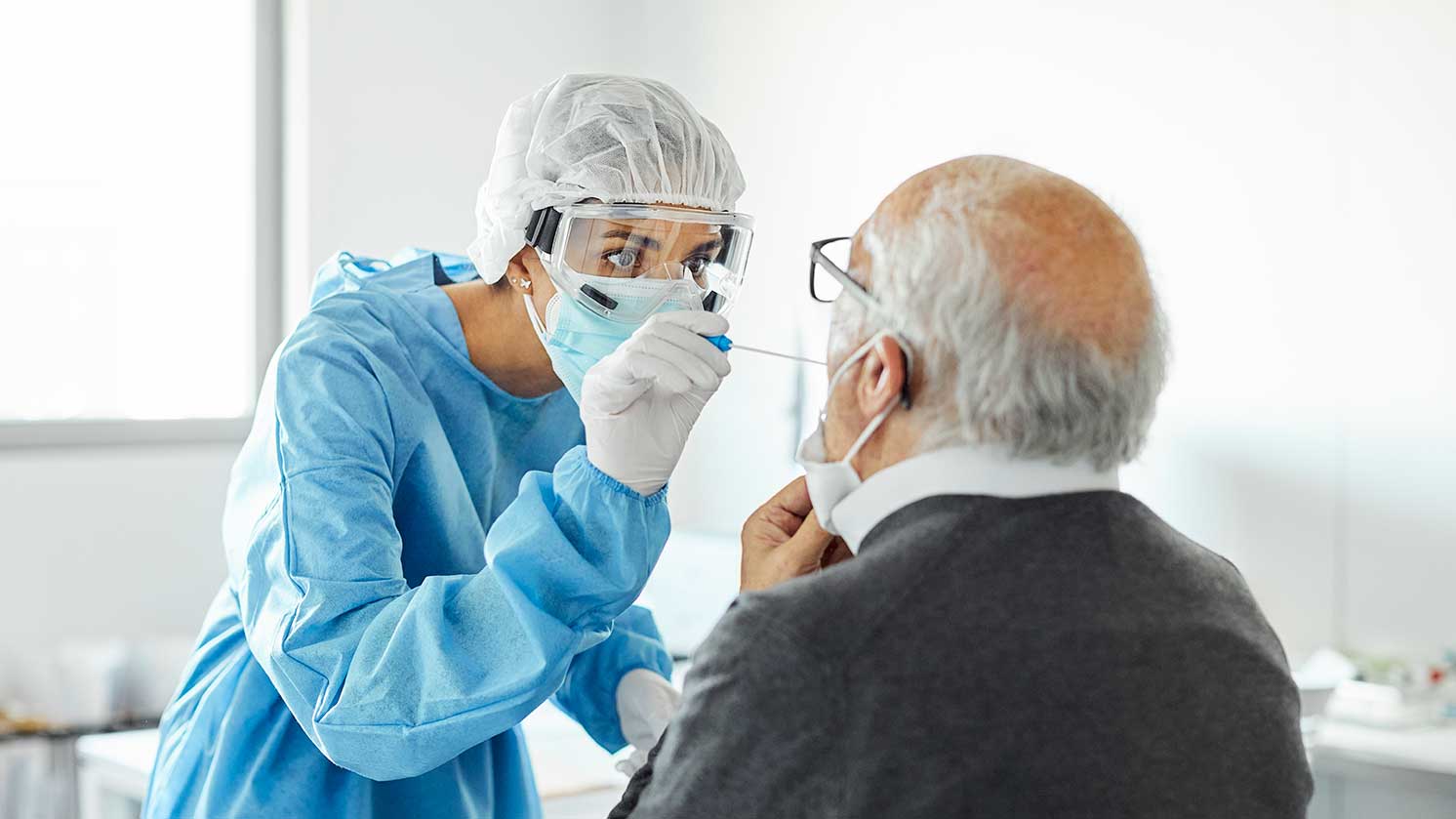
Thyroid Biopsy
Test Overview
A thyroid
biopsy is a procedure in which a small sample of
tissue is removed from the
thyroid gland and looked at under a microscope for
cancer, infection, or other thyroid problems. The
thyroid
gland is found in front of the windpipe (trachea), just below the
voice box (larynx).
A sample of thyroid tissue can be taken by:
- Fine-needle biopsy. Your doctor puts a
thin needle through the skin and into the thyroid gland. Many thyroid specialists
like to use a needle biopsy method rather than surgery.
- Open
biopsy. Your doctor makes a cut (incision) through the skin to see the thyroid
gland. This method is done when other tests have not found the
cause of your symptoms.
Why It Is Done
A thyroid biopsy is done to:
- Find the cause of a lump (nodule) found
in the thyroid gland. Lumps in the thyroid gland may be found during a
physical examination or seen on a thyroid
ultrasound test or radioactive thyroid scan.
- Find the cause of a
goiter. Symptoms of a goiter include breathing and
swallowing problems, paralyzed vocal cords, a feeling of fullness in the neck,
and weight loss.
How To Prepare
Tell your doctor if you:
- Take any medicines regularly. Be sure your doctor knows the names and doses of all your medicines. Your doctor will instruct you if and when you
need to stop taking any of the following medicines.
- Thyroid
hormones
- Antithyroid
medicines
- Medicines that have iodine, such as iodized salt,
kelp, cough syrups, multivitamins, or the heart medicine amiodarone
(Cordarone, Pacerone)
- Are
allergic to any medicines, including
anesthetics.
- Have had bleeding problems
or take blood-thinners, such as aspirin or warfarin
(Coumadin).
- Have had any test using radioactive
materials or iodine dye 4 weeks before the thyroid biopsy.
- Are or might be pregnant.
- Are
breast-feeding.
Before having a thyroid biopsy, you may need to have blood tests to
see whether you have any bleeding problems or blood-clotting disorders.
To prepare for a thyroid biopsy:
- You do not need to do anything before a needle biopsy. You will be asked to undress and put on a hospital
gown. You will be awake during the biopsy.
- Do not eat or drink anything for 10 hours before an open biopsy. You
will get general anesthesia and be asleep during the biopsy. If you take medicines every day, ask your
doctor whether you can take these medicines on the
day of the biopsy. You can eat your normal diet after the biopsy.
Just before the test, you will remove your dentures (if
you wear them) and all jewelry or metal objects from around your neck and upper
body.
Before having a thyroid biopsy, you need to sign a consent
form that says you understand the risks of the thyroid biopsy and agree to have
the test done. Talk to your doctor about any concerns you have regarding the
need for the test, its risks, how it will be done, or what the results will
mean. To help you understand the importance of this test, fill out the
medical test
information form (What is a PDF document?).
How It Is Done
Needle biopsy
A needle biopsy is done in a hospital, clinic, or your doctor's
office. During the test, you will lie on your back with a pillow under your
shoulders, your head tipped backward, and your neck extended. This position
pushes the thyroid gland forward, making it easier to do the biopsy. It is
important to lie very still during the biopsy. Do not cough or
swallow when the needle is in place. A needle biopsy takes about 5 to 10
minutes.
Before the biopsy, you may be given a
medicine (sedative) to help you relax. Your doctor cleans the skin over your thyroid gland with a special soap.
Your doctor may use an
ultrasound to guide the placement of the needle. He or she will put a thin needle into your thyroid
gland and take out a small amount of thyroid tissue and fluid. The tissue is looked at under a microscope.
A small bandage is placed over
the area where the needle was inserted.
Open biopsy
An open biopsy of the thyroid gland is done in an operating room
by a
surgeon. It is done when other tests have
not found the cause of your symptoms. An open biopsy takes about an
hour.
You may be given a
sedative to help you relax. An
intravenous (IV) line is inserted in a vein in your arm for medicine
and fluids. You will be asleep for the biopsy.
The skin over your thyroid gland
is cleaned with a special soap. A small cut (incision) is made in your neck. A sample of thyroid tissue is taken or your doctor can take out a lump if one is present. Some
thyroid tissue may be sent to the laboratory during the biopsy to see
whether it has cancer cells. If cancer cells are present, your doctor may
take out more or all of the thyroid gland.
The
incision is closed with stitches. A bandage is put over the
stitches. Keep the biopsy site covered and dry for 48 hours. A small amount of
bleeding from the biopsy site can be expected. Ask your doctor how much
drainage to expect. Some people may need to stay in the hospital for one night.
How It Feels
Needle biopsy
You may find it uncomfortable to lie still with
your head tipped backward.
During a needle biopsy, you may feel a quick sting or pinch in your neck.
The biopsy site may be sore and tender for
1 to 2 days. You can take nonprescription pain medicine, such as
acetaminophen for the discomfort.
Open biopsy
You will be asleep and feel nothing during the biopsy. After the biopsy, you may have some nausea, general muscle aches, and may feel tired for 1 to 2 days. You also may have a sore throat and sound hoarse. Suck on throat lozenges or gargle with warm salt water to help your sore throat.
The biopsy site may be sore and tender
for 3 to 4 days. Your doctor will give you pain medicine for this.
After a thyroid biopsy, you may be more comfortable if you keep your head up on a pillow when you lie
down. Support the back of your head and neck
with both hands when you sit up to prevent discomfort at the biopsy
site.
Risks
There is a small chance of problems from a thyroid biopsy, such as infection and bleeding.
Ongoing bleeding can be a problem for people with bleeding disorders. Aspirin, warfarin (Coumadin), and other blood-thinning medicines can make bleeding more likely. Your doctor will give you specific instructions on when to call him or her with problems.
After the test
Call your doctor immediately if you have:
- A lot of bleeding through the
bandage.
- A hard time swallowing.
- Signs of infection,
such as:
- Increased pain, swelling, redness, or
warmth around the biopsy site.
- Red streaks spreading from the
biopsy site.
- Drainage of pus from the biopsy site.
- Swollen lymph nodes in the neck.
- Fever.
Results
A thyroid
biopsy is a procedure in which a small sample of
tissue is removed from the
thyroid gland and looked at under a microscope for
cancer, infection, or other thyroid problems. Results from a thyroid biopsy
are usually available in a few days.
Thyroid biopsy
| Normal: |
The biopsy shows normal thyroid tissue.
|
| Abnormal: |
The biopsy sample shows thyroid disease (such
as inflammation of the thyroid gland), thyroid cancer, or
a noncancerous (benign) tumor.
|
|
A thyroid
cyst is found at the time of a biopsy. Most cysts of the thyroid gland are
noncancerous.
|
What Affects the Test
Reasons you may not be able to have the test or why the results may not be helpful include:
- If you have bleeding problems or take blood thinners.
People with these conditions will get specific instructions from their doctor before the biopsy.
- If you cannot lie still during a needle biopsy. You may need
general anesthesia for the
biopsy.
What To Think About
- A normal (negative) report on a thyroid biopsy
does not mean for sure that the thyroid gland is healthy. It is possible that a
problem may have been missed. Many thyroid tumors are small,
and the biopsy sample may come from an area of the thyroid that is free
from disease. A fine-needle biopsy can have a
false-negative result.
- Your doctor may not be able to use a needle biopsy to find out what is causing your symptoms. An open thyroid biopsy may be
needed.
- If a thyroid nodule is found and thyroid hormone levels
are normal, most doctors recommend a thyroid needle biopsy instead of a thyroid
ultrasound or radioactive thyroid scan. For more information, see the medical
tests
Thyroid and Parathyroid Ultrasound,
Thyroid Scan, and
Radioactive Iodine Uptake Test.
- If a
thyroid nodule is found and
high thyroid levels (hyperthyroidism) are present, a radioactive iodine
uptake (RAIU) test is generally recommended before a thyroid biopsy. Nodules
that cause hyperthyroidism are generally noncancerous (benign) and can be
treated with medicine or radioactive iodine. For more information, see the
medical test
Radioactive Iodine Uptake Test.
References
Other Works Consulted
-
Chernecky CC, Berger BJ, eds. (2004). Laboratory Tests and Diagnostic Procedures, 4th ed.
Philadelphia: Saunders.
Credits
| Author | Jan Nissl, RN, BS |
| Editor | Susan Van Houten, RN, BSN, MBA |
| Associate Editor | Tracy Landauer |
| Primary Medical Reviewer | Caroline S. Rhoads, MD - Internal Medicine |
| Specialist Medical Reviewer | David C.W. Lau, MD, PhD, FRCPC - Endocrinology & Metabolism |
| Last Updated | September 15, 2006 |
|
|
| Author: | Jan Nissl, RN, BS | Last Updated: September 15, 2006 |
| Medical Review: | Caroline S. Rhoads, MD - Internal Medicine
David C.W. Lau, MD, PhD, FRCPC - Endocrinology & Metabolism |
|
|
|
© 1995-2008, Healthwise, Incorporated. Healthwise, Healthwise for every health decision, and the Healthwise logo are trademarks of Healthwise, Incorporated. This information does not replace the advice of a doctor. Healthwise disclaims any warranty or liability for your use of this information. Your use of this information means that you agree to the Terms of Use. How this information was developed to help you make better health decisions.
|
|