|
|
DNA Fingerprinting
Test Overview
DNA fingerprinting is a test to identify and evaluate the genetic
information, called
DNA (deoxyribonucleic acid), of a person's cells. It
is called a "fingerprint" because it is very unlikely that any 2 people would
have exactly the same cellular information, in the same way that it is very
unlikely that any 2 people would have exactly the same physical fingerprint.
The test is used to determine whether a family relationship exists between two
people, to identify organisms causing a disease, and to solve crimes.
Only a small sample of cells is needed for DNA fingerprinting. A
drop of blood or the root of a hair contains enough DNA for testing. Semen,
hair, or skin scrapings are often used in criminal investigations. See a
picture of DNA testing in a criminal investigation .
A person who has DNA fingerprinting done voluntarily usually
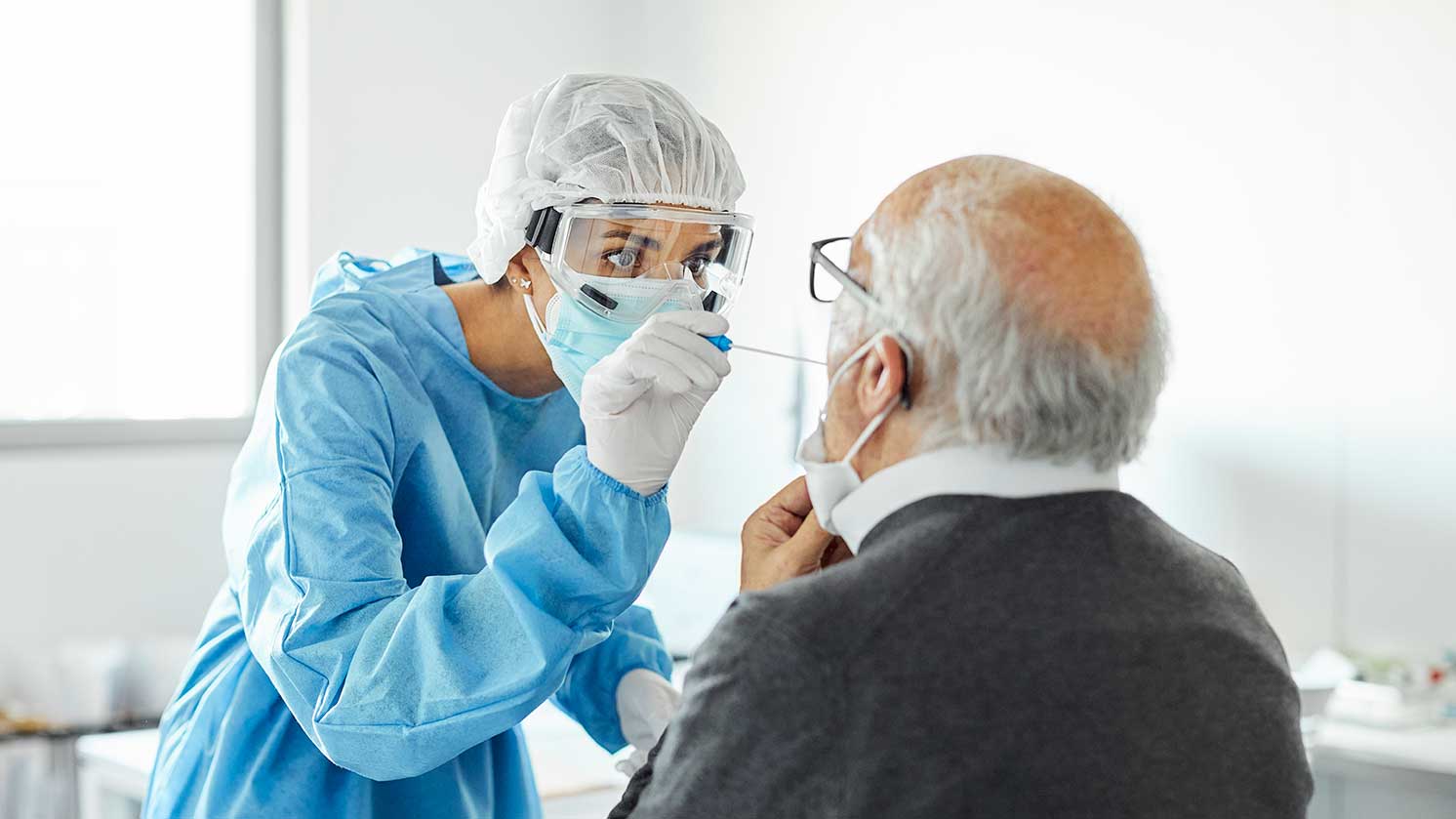
provides a sample of blood taken from a vein. DNA testing also can be done on
cells obtained by a simple mouthwash or a swab of the cheeks inside the mouth,
but these methods are not recommended.
Why It Is Done
DNA fingerprinting is done to:
- Determine who a person's parents are (establish
paternity). This test also may be used to identify the parents of babies who
were switched at birth.
- Solve crimes (forensic science). Blood, semen, skin, or other
tissue left at the scene of a crime can be analyzed to help prove whether the
suspect was or was not present at the crime scene.
- Identify a
body. This is useful if the body is badly decomposed or if only body parts are
available, such as following a natural disaster or battle.
How To Prepare
Tell your health professional if you have had a blood transfusion
within the past 3 months. No other special preparation is required before
having DNA fingerprinting.
Talk to your health professional about any concerns you have about
the need for the test, its risks, how it will be done, or what the results will
indicate. To help you understand the importance of this test, fill out the
medical test
information form (What is a PDF document?).
How It Is Done
Blood sample from a vein
DNA that is used to establish paternity is collected from a blood
sample. The health professional drawing blood will:
- Wrap an elastic band around your upper arm to
stop the flow of blood. This makes the veins below the band larger so it is
easier to put a needle into the vein.
- Clean the needle site with
alcohol.
- Put the needle into the vein. More than one needle stick
may be needed.
- Attach a tube to the needle to fill it with
blood.
- Remove the band from your arm when enough blood is
collected.
- Apply a gauze pad or cotton ball over the needle site as
the needle is removed.
- Apply pressure to the site and then a
bandage.
Blood sample from a heel stick
If a DNA blood test is done on a baby, a heel stick will be done
instead of a blood draw from a vein.
For a heel stick blood sample, several drops of blood are
collected from the heel of the baby. The skin of the heel is cleaned with
alcohol and then pricked with a small, sterile lancet. Several drops of blood
are collected inside circles on a specially prepared piece of paper. When
enough blood has been collected, a gauze pad or cotton ball is placed over the
puncture site. Pressure is applied to the puncture site briefly and then a
small bandage is usually placed over it.
DNA can be collected from dried blood, skin, saliva, hair, urine,
and semen. Bone and teeth samples are used when a body is badly
decomposed.
How It Feels
Blood sample from a vein
You may feel nothing at all from the needle puncture, or you may
feel a brief sting or pinch as the needle goes through the skin. Some people
feel a stinging pain while the needle is in the vein. However, many people do
not feel any pain, or have only minor discomfort, once the needle is positioned
in the vein. The amount of pain you feel depends on the skill of the health
professional drawing the blood, the condition of your veins, and your
sensitivity to pain.
Blood sample from a heel stick
The baby may feel a brief sting or a pinch when the lancet pricks
the skin. While the blood is being collected, there is very little or no
discomfort.
The collection of DNA from saliva, urine, or semen does not cause
discomfort.
Risks
Blood sample from a vein
There is very little risk of complications from having blood
drawn from a vein.
- You may develop a small bruise at the
puncture site. You can reduce the risk of bruising by keeping pressure on the
site for several minutes after the needle is withdrawn.
- In rare
cases, the vein may become inflamed after the blood sample is taken. This
condition is called phlebitis and is usually treated with a warm compress
applied several times daily.
- Continued bleeding can be a problem
for people with bleeding disorders. Aspirin, warfarin (Coumadin), and other
blood-thinning medicines can also make bleeding more likely. If you have
bleeding or clotting problems, or if you take blood-thinning medicine, tell
your health professional before your blood is drawn.
Blood sample from a heel stick
There is very little risk of complications from having blood
drawn from a heel stick. A small bruise may develop at the puncture
site.
There are no risks associated with collecting DNA from saliva,
urine, or semen.
Results
DNA fingerprinting is a test to identify and evaluate the genetic
information, called
DNA (deoxyribonucleic acid), of a person's
cells.
DNA samples can:
- Determine who a person's parents are (establish
paternity). Tissue samples from two people can also be compared to determine
how likely they are to be blood relatives.
- Determine whether a
suspect was present at a crime scene, by comparing DNA from the scene to the
DNA of the suspect.
- Positively identify a body. Bone and hair
samples can be used to identify a badly decomposed body.
What Affects the Test
Factors that can interfere with your test or the accuracy of the
results include:
- Sample size. The possibility of having
inaccurate test results increases if a very small sample of DNA is available
for testing. The chance that the DNA will be mixed up with some other DNA is
also higher with a smaller sample.
- Having had a blood transfusion within the past 3
months.
- Decay of the tissue sample.
What To Think About
- Because DNA fingerprinting has been used to
identify bodies, such as military personnel killed in action or crime victims,
a DNA database (much like a fingerprint database) is now being developed. DNA
fingerprinting is more accurate than traditional fingerprints, dental records,
blood type, or ID tags for this
purpose.
- Although home paternity test kits are available, they are
not as accurate as DNA fingerprinting, and the results cannot be used in a
court of law. If you are thinking about using of one of these kits, talk with
your health professional.
- Other tests that can help determine the
likelihood of two people being related or that can detect inherited diseases
include karyotyping and genetic testing. For more information, see the medical
tests
Karyotype and
Genetic Test.
References
Other Works Consulted
-
Fischbach FT, Dunning MB III, eds. (2004).
Manual of Laboratory and Diagnostic Tests, 7th ed.
Philadelphia: Lippincott Williams and Wilkins.
Credits
| Author | Maria G. Essig, MS, ELS |
| Editor | Susan Van Houten, RN, BSN, MBA |
| Associate Editor | Tracy Landauer |
| Primary Medical Reviewer | Joy Melnikow, MD, MPH - Family Medicine |
| Specialist Medical Reviewer | Renee H. Martin, PhD - Medical Genetics |
| Last Updated | April 26, 2007 |
|
|
| Author: | Maria G. Essig, MS, ELS | Last Updated April 26, 2007 |
| Medical Review: | Joy Melnikow, MD, MPH - Family Medicine
Renee H. Martin, PhD - Medical Genetics |
|
|
|
© 1995-2007, Healthwise, Incorporated. Healthwise, Healthwise for every health decision, and the Healthwise logo are trademarks of Healthwise, Incorporated.
This information does not replace the advice of a doctor. Healthwise disclaims any warranty or liability for your use of this information. Your use of this information means that you agree to the Terms of Use.
|
|