Ir al menú principal Ir al contenido principal Ir al pie de página Para Medicare Para Proveedores Para Agentes Para Empleadores English Para individuos y familias: Para individuos y familias Médica Dental Otros seguros complementarios Explorar cobertura a través de tu empleador Cómo comprar seguros de salud Tipos de seguro dental Período de Inscripción Abierta vs. Período Especial de Inscripción Ver todos los temas Comprar planes de Medicare Guía para miembros Buscar un médico Ingresar a myCigna
Inicio Centro de información Biblioteca del bienestar Vaginal Birth After Cesarean (VBAC)
Vaginal Birth After Cesarean (VBAC)

What is a vaginal birth after cesarean (VBAC)?

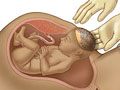
Vaginal birth after cesarean (VBAC) means delivering your baby through the vagina after you had a cesarean section (C-section) for an earlier birth. VBAC is often safe, but it does have some risks. And it may not succeed. You may not be able to complete the birth through the vagina.

If you and your doctor agree to try a VBAC, you will have what is called a "trial of labor after cesarean," or TOLAC. This means that you plan to go into labor with the goal to deliver through the vagina. But as in any labor, it's hard to know if a VBAC will work. You still may need a C-section.

Is a VBAC safe?

Having a vaginal birth after having a C-section can be a safe choice. Whether it's right for you depends on several things, such as why you had a C-section before and how many C-sections you've had. Experts recommend having a VBAC in a hospital that can do an emergency C-section.

If you choose VBAC, you will be closely watched during labor. If you or your baby shows signs of having problems, you may have a C-section.

What are the benefits of a VBAC?

Benefits of VBAC include:

  • Avoiding surgery. All surgeries have risks, such as the risk of bleeding, infection, or blood clots.
  • Avoiding another scar on the uterus. If you are planning to have another baby in the future, scarring is important to think about. Each added scar on the uterus raises the risk of having problems in a future pregnancy, such as placenta previa or placenta accreta.
  • A lower risk of infection after childbirth.
  • A lower risk that the baby will have breathing problems after delivery.
  • A quicker recovery.

What are the risks?

The most common risk is that a VBAC does not succeed, and then a C-section must be started in the middle of labor. A C-section is a major surgery and has risks such as infection, bleeding, and blood clots. The risk of infection is higher if you try to give birth through the vagina and then need a C-section.

The most serious risk of a VBAC is that a C-section scar could come open during a trial of labor. This is very rare. But when it does happen, it can be very serious for you and the baby. The risk that a scar will tear open is very low during VBAC if you have just one low cesarean scar and your labor isn't started with medicine. This risk is why VBAC is often only offered by hospitals that can do an emergency C-section.

Is VBAC Right for You?

Is VBAC Right for You?

Whether a VBAC is right for you depends on if you have any risk factors (things that increase your risk) that could make it unsafe. It also depends on how likely it is that a VBAC will be successful for you. You'll need to talk about this with your doctor.

Here are some things to think about when considering a VBAC.

Why would you have a VBAC?

  • You want to experience a vaginal birth.
  • You want to lower the chances that your baby will have breathing problems after delivery.
  • You feel that the benefits of vaginal birth outweigh the small risk that the scar on your uterus may break open during labor. If a scar breaks open, it can be very dangerous for both you and your baby.
  • You want to avoid another scar on the uterus. Each added scar can cause problems with the placenta during a future pregnancy.

Why would you not be able to have a VBAC?

  • Your hospital doesn't offer VBAC.
  • You are at greater risk of your uterus tearing because:
    • The scar on your uterus is vertical.
    • You've had more than two cesareans.
    • You are carrying triplets or more.
  • The likelihood is low that a VBAC will work for you. Your doctor may use a special calculator to figure out how likely it is that a VBAC will succeed.
  • You have a placenta problem or another medical issue that could make a vaginal birth risky.
  • Something happens during your pregnancy or labor that requires a cesarean. For example:
    • You develop a problem with your blood pressure.
    • Your baby isn't head-down.
    • Your labor isn't progressing well.
    • Your baby is having problems.

Learn more

Watch

What To Expect

What To Expect

A trial of labor after cesarean, or TOLAC, is the same as normal labor. But you and the baby will be watched more closely. During early labor, you can be as active as you want. There are no specific limits for TOLAC until active labor starts. During the active part of labor, electronic fetal monitoring is used to watch for early signs of problems.

If you are doing a trial of labor and you've never had a vaginal birth, your labor will be like a first-time labor. This is also true if your previous cesarean was done early in labor.

Medicines for starting or strengthening a trial of labor

As the end of pregnancy nears, the cervix normally becomes soft. It starts to open (dilate) and thin (efface) to prepare for labor and delivery. If labor doesn't start on its own, it may be started artificially (induced).

Some doctors or midwives avoid the use of any medicine to induce a trial of labor. That's because they are concerned that the uterus may break open (rupture). Other doctors or midwives are comfortable with the careful use of oxytocin (Pitocin) to induce labor if the cervix is soft and dilating.

If your labor slows or stops progressing, your doctor or midwife may use oxytocin to strengthen your contractions.

Pain relief options

As with most vaginal births, you can safely use nonmedical and medical pain relief options during labor.

Nonmedical options include:

  • Support. Having a doula or support person with you may help you manage your pain better.
  • Breathing techniques. They can help distract you from pain.
  • Imagery. For example, you could imagine your contractions as waves rolling over you.
  • Changing positions. This can help you be more comfortable.
  • Massage.
  • Laboring in water.

Medical options include:

  • Epidural anesthesia. This type partly or fully numbs the lower part of your body.
  • Intravenous (I.V.) anesthesia. This type partly relieves pain and helps you relax.
  • Nitrous oxide. You can give this to yourself by breathing it in through a mouthpiece or mask.
  • A pudendal block. It numbs the vagina and perineum during the pushing part of labor.

Learn more

Watch

Recovery

Recovery

Vaginal birth after cesarean (VBAC) recovery is similar to recovery after any vaginal birth. After a vaginal birth, you most likely can go home within 24 to 48 hours. Recovery from a C-section requires 2 to 4 days in the hospital. You'll also need a time of limited activity as the incision heals.

The overall risk of infection is low for both vaginal and cesarean deliveries. But it's lower after a vaginal birth. Before you leave the hospital, you will get a list of signs of infection to watch for in the first few weeks after the birth.

After the birth, it'll be important to take good care of yourself—by resting when you can, having good support, and staying healthy. Consider asking a loved one to stay with you to help for a few days. At first, plan to limit your guests and how long they stay, so you can rest.

Watch

Esta información no reemplaza el consejo de un médico. Ignite Healthwise, LLC, niega toda garantía y responsabilidad por el uso de esta información. El uso que usted haga de esta información implica que usted acepta los Términos de Uso. Aprenda cómo desarrollamos nuestro contenido.

© 2024-2025 Ignite Healthwise, LLC.

Enlaces relacionados

Histerectomía Preeclampsia Desprendimiento prematuro de placenta Placenta previa Operación cesárea Presentación de nalgas y parto de nalgas Trabajo de parto y alumbramiento

<cipublic-spinner variant="large"><span>Loading…</span></cipublic-spinner>

Page Footer

Quiero...

Obtener una tarjeta ID Presentar un reclamo Ver mis reclamos y EOB Verificar la cobertura de mi plan Ver la lista de medicamentos con receta Buscar un médico, dentista o centro dentro de la red Buscar un formulario Buscar información del formulario de impuestos 1095-B Ver el Glosario de Cigna Comunicarme con Cigna

Audiencia

Individuos y familias Medicare Empleadores Agentes Proveedores

Sitios seguros para miembros

Portal myCigna para miembros Portal para proveedores de cuidado de la salud Cigna para empleadores Portal de recursos para clientes Cigna para agentes

Información sobre The Cigna Group

Acerca de Cigna Healthcare Perfil de la compañía Empleos Sala de prensa Inversionistas Distribuidores The Cigna Group Administradores externos Internacional Evernorth

 Cigna. Todos los derechos reservados.

Privacidad Asuntos legales Divulgaciones sobre productos Nombres de la compañía Cigna Derechos de los clientes Accesibilidad Aviso sobre no discriminación Asistencia idiomática [PDF] Reportar fraude Mapa del sitio Configuración de cookies

Aviso legal

Los planes individuales y familiares de seguro médico y dental están asegurados por Cigna Health and Life Insurance Company (CHLIC), Cigna HealthCare of Arizona, Inc., Cigna HealthCare of Illinois, Inc., Cigna HealthCare of Georgia, Inc., Cigna HealthCare of North Carolina, Inc., Cigna HealthCare of South Carolina, Inc. y Cigna HealthCare of Texas, Inc. Los planes de beneficios de salud y de seguro de salud de grupo están asegurados o administrados por CHLIC, Connecticut General Life Insurance Company (CGLIC) o sus afiliadas (puedes ver un listado de las entidades legales que aseguran o administran HMO para grupos, HMO dentales y otros productos o servicios en tu estado). Los planes o pólizas de seguro para lesiones accidentales, enfermedades críticas y cuidado hospitalario son distribuidos exclusivamente por o a través de subsidiarias operativas de Cigna Corporation, son administrados por Cigna Health and Life Insurance Company y están asegurados por (i) Cigna Health and Life Insurance Company (Bloomfield, CT), (ii) Life Insurance Company of North America (“LINA”) (Philadelphia, PA) o (iii) New York Life Group Insurance Company of NY (“NYLGICNY”) (New York, NY), anteriormente llamada Cigna Life Insurance Company of New York. El nombre Cigna, el logotipo y otras marcas de Cigna son propiedad de Cigna Intellectual Property, Inc. LINA y NYLGICNY no son afiliadas de Cigna.

Todas las pólizas de seguros y los planes de beneficios de grupo contienen exclusiones y limitaciones. Para conocer la disponibilidad, los costos y detalles completos de la cobertura, comunícate con un agente autorizado o con un representante de ventas de Cigna. Este sitio web no está dirigido a los residentes de New Mexico.

Al seleccionar estos enlaces saldrás de Cigna.com hacia otro sitio web que podría no ser un sitio web de Cigna. Cigna no puede controlar el contenido ni los enlaces de sitios web que no son de Cigna. Detalles