Skip to main navigation Skip to main content Skip to footer For Medicare For Providers For Brokers For Employers Español For Individuals & Families: For Individuals & Families Medical Dental Other Supplemental Explore coverage through work How to Buy Health Insurance Types of Dental Insurance Open Enrollment vs. Special Enrollment See all topics Shop for Medicare plans Member Guide Find a Doctor Log in to myCigna
Home Knowledge Center Wellness Library Inguinal Hernia

Inguinal Hernia

What is an inguinal hernia?

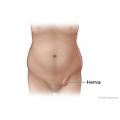
An inguinal hernia (say "IN-gwuh-nul HER-nee-uh") happens when tissue bulges through a weak spot in your groin area. You may see or feel a tender bulge in the groin or scrotum. You may also have pain, pressure, or a burning feeling.

What causes it?

Inguinal hernias are caused by:

  • An opening in the passage from the belly to the genitals, called the inguinal canal, that does not close as it should be before birth.
  • Belly (abdominal) muscles that are weakened or torn.

Both of these things can result in a weak area in the belly muscle. Pressure on the area can then cause tissue to push through the belly muscles and into the groin. This causes a bulge in the groin or scrotum.

A hernia can happen soon after birth or much later in life.

A femoral hernia, which is sometimes mistaken for an inguinal hernia, happens when tissue bulges from the lower belly into the upper thigh, just below the groin crease. The cause of a femoral hernia is often hard to determine.

What are the symptoms of an inguinal hernia?

The main symptom of an inguinal hernia is a bulge in the groin or scrotum. It often feels like a round lump and may be uncomfortable or painful. The bulge may form over a period of weeks or months. Or it may appear suddenly after an activity that strains the groin.

How is it diagnosed?

A doctor can usually tell if you have an inguinal hernia based on your symptoms and a physical exam. The bulge of a hernia is usually easy to feel.

How is an inguinal hernia treated?

Only surgery can repair an inguinal hernia. But if your hernia does not bother you and it causes no other problems, you may not need treatment right now. Hernias in babies and young children can cause more belly problems and often need to be repaired with surgery right away.

Prevention

Prevention

Most inguinal hernias cannot be prevented, especially in infants and children. Adults may be able to prevent a hernia from bulging or prevent a hernia from recurring by using some common self-care steps.

  • Try to avoid becoming overweight. Being overweight creates greater belly pressure and increases your risk for developing an inguinal hernia. Stay at a weight that is healthy for you through diet and exercise.
  • Avoid rapid weight loss (such as in crash dieting). Rapid weight-loss programs may be lacking in protein and vitamins that are needed for muscle strength, causing weakness in the muscles of the belly.
  • Avoid constipation and straining. Constipation and straining during bowel movements and urination causes increased pressure inside the belly.
  • Lift carefully. Use good body mechanics when you lift heavy objects. Lift with your legs, not with your back.
  • If you smoke, try to quit. Chronic coughing from smoking increases the risk for developing a hernia. If you need help quitting, talk to your doctor about stop-smoking programs and medicines. These can increase your chances of quitting for good.
Symptoms

Symptoms

The main symptom of an inguinal hernia is a bulge in the groin or scrotum. It often feels like a round lump. The bulge may form over a period of weeks or months. Or it may appear suddenly after you've been lifting heavy weights, coughing, bending, straining, or laughing. The hernia may be uncomfortable or painful. Some cause no pain.

A hernia also may cause swelling and a feeling of heaviness, tugging, or burning in the area of the hernia. These symptoms may get better when you lie down.

In babies, a hernia may bulge when the child cries or moves around.

Strangulated hernias, which happen when part of the intestine gets trapped in the hernia and the blood supply is cut off, are more common in babies and children than in adults. They can cause nausea and vomiting and severe pain. A baby with a strangulated hernia may cry and refuse to eat. Emergency surgery is always needed for a strangulated hernia.

What Happens

What Happens

Inguinal hernias typically flatten or disappear when they are pushed gently back into place or when you lie down. Over time, hernias tend to increase in size as the belly muscle wall becomes weaker and more tissue bulges through.

If you can't push your hernia back into your belly, the tissue fills up the hernia sac and is trapped (incarcerated).

If a loop of the intestine is trapped very tightly in the hernia sac, the blood supply to that part of the intestine can be cut off (strangulated), causing tissue to die. If tissue is trapped, the testicle and its blood vessels can also be damaged.

Emergency surgery is always needed for a strangulated hernia.

When to Call

When to Call

Contact a doctor now if:

  • Your child has an inguinal hernia that can't be pushed back into the belly with gentle pressure.
  • You or your child has an inguinal hernia and symptoms of strangulation, such as nausea, vomiting, fever, tenderness, and severe cramping pain in the groin area. These symptoms mean that the intestine has lost blood supply.

Contact a doctor if:

  • Your infant has a lump in the groin area.
  • You or your child has a tender bulge in the groin or scrotum, even if the bulge disappears when lying down.
  • You or your child has increasing groin discomfort or pain. The discomfort may be increased by bending or lifting. It may extend into the scrotum.

Talk with your doctor before wearing a corset or truss for a hernia. These devices are not recommended for treating hernias. They sometimes can do more harm than good.

Watchful waiting

Watchful waiting is a wait-and-see approach.

Watchful waiting is not okay for infants and children who have inguinal hernias. Contact your child's doctor to have your child checked.

If you aren't sure if you have a groin muscle strain or a hernia, watchful waiting with home treatment for 1 to 2 weeks is okay to try. If you have pain that is increasing or severe, an obvious lump, or evidence of bowel blockage or urinary symptoms, contact your doctor to be checked.

You and your doctor can decide whether you should have surgery to fix your hernia or if you can wait. If your hernia doesn't bother you, you can probably wait to have surgery.

Exams and Tests

Exams and Tests

Your doctor can usually diagnose an inguinal hernia by asking questions about your health and doing a physical exam. Tests such as ultrasound and CT scans are not usually needed. In most cases, a doctor can find an inguinal hernia during the physical exam.

Other tests may be needed if you need to have surgery. These tests check the status of any current health problems, such as lung, heart, or bleeding problems.

Treatment Overview

Treatment Overview

Only surgery can repair an inguinal hernia. But if the hernia does not bother you and it causes no other problems, you may not need treatment right now.

Many people with hernias have surgery to repair them when more symptoms develop. It is very uncommon for a hernia to become strangulated, a serious problem that happens when part of your intestine gets trapped inside the hernia.

Some people wait to have surgery. Waiting to have surgery does not increase the chance that part of your intestine or belly tissue will get stuck in your hernia. Waiting will also not increase your risk for other belly problems.

The two types of surgeries to repair inguinal hernias are:

  • Laparoscopic inguinal hernia repair.
  • Open inguinal hernia repair.

Hernias in babies and young children can cause more belly problems and often need to be repaired with surgery right away because of the increased risk of incarceration and strangulation.

Self-Care

Self-Care

  • Be safe with medicines. Read and follow all instructions on the label.
    • If you are not taking a prescription pain medicine, ask your doctor if you can take an over-the-counter medicine.
    • If the doctor gave you a prescription medicine for pain, take it as prescribed.
    • Store your prescription pain medicines where no one else can get to them. When you are done using them, dispose of them quickly and safely. Your local pharmacy or hospital may have a drop-off site.
  • Stay at a weight that is healthy for you. Talk to your doctor if you need help losing weight.
  • Include fruits, vegetables, legumes, and whole grains in your diet each day. These foods are high in fiber and will make it easier to avoid constipation and straining. Straining during bowel movements and urination causes increased pressure inside the belly.
  • Use proper lifting techniques and avoid heavy lifting if you can. To lift things more safely, bend your knees and let your arms and legs do the work. Keep your back straight, and do not bend over at the waist. Keep the load as close to your body as you can. Move your feet instead of turning or twisting your body.
  • If you smoke, try to quit. Smoking can cause coughing, which can cause your hernia to bulge. If you need help quitting, talk to your doctor about stop-smoking programs and medicines. These can increase your chances of quitting for good.
  • Talk with your doctor before wearing a corset or truss for a hernia. These devices are not recommended for treating hernias and sometimes can do more harm than good.

This information does not replace the advice of a doctor. Ignite Healthwise, LLC, disclaims any warranty or liability for your use of this information. Your use of this information means that you agree to the Terms of Use. Learn how we develop our content.

© 2024-2025 Ignite Healthwise, LLC.

Related Links

Groin Problems and Injuries Umbilical Hernia in Children Common Types of Hernias

<cipublic-spinner variant="large"><span>Loading…</span></cipublic-spinner>

Page Footer

I want to...

Get an ID card File a claim View my claims and EOBs Check coverage under my plan See prescription drug list Find an in-network doctor, dentist, or facility Find a form Find 1095-B tax form information View the Cigna Glossary Contact Cigna

Audiences

Individuals and Families Medicare Employers Brokers Providers

Secure Member Sites

myCigna member portal Health Care Provider portal Cigna for Employers Client Resource Portal Cigna for Brokers

The Cigna Group Information

About Cigna Healthcare Company Profile Careers Newsroom Investors Suppliers The Cigna Group Third Party Administrators International Evernorth

 Cigna. All rights reserved.

Privacy Legal Product Disclosures Cigna Company Names Customer Rights Accessibility Non-Discrimination Notice Language Assistance [PDF] Report Fraud Sitemap Cookie Settings

Disclaimer

Individual and family medical and dental insurance plans are insured by Cigna Health and Life Insurance Company (CHLIC), Cigna HealthCare of Arizona, Inc., Cigna HealthCare of Illinois, Inc., Cigna HealthCare of Georgia, Inc., Cigna HealthCare of North Carolina, Inc., Cigna HealthCare of South Carolina, Inc., and Cigna HealthCare of Texas, Inc. Group health insurance and health benefit plans are insured or administered by CHLIC, Connecticut General Life Insurance Company (CGLIC), or their affiliates (see a listing of the legal entities that insure or administer group HMO, dental HMO, and other products or services in your state). Accidental Injury, Critical Illness, and Hospital Care plans or insurance policies are distributed exclusively by or through operating subsidiaries of Cigna Corporation, are administered by Cigna Health and Life Insurance Company, and are insured by either (i) Cigna Health and Life Insurance Company (Bloomfield, CT); (ii) Life Insurance Company of North America (“LINA”) (Philadelphia, PA); or (iii) New York Life Group Insurance Company of NY (“NYLGICNY”) (New York, NY), formerly known as Cigna Life Insurance Company of New York. The Cigna name, logo, and other Cigna marks are owned by Cigna Intellectual Property, Inc. LINA and NYLGICNY are not affiliates of Cigna.

All insurance policies and group benefit plans contain exclusions and limitations. For availability, costs and complete details of coverage, contact a licensed agent or Cigna sales representative. This website is not intended for residents of New Mexico.

Selecting these links will take you away from Cigna.com to another website, which may be a non-Cigna website. Cigna may not control the content or links of non-Cigna websites. Details