Skip to main navigation
Skip to main content
Skip to footer
For
Providers
For
Brokers
For
Employers
Español
For Individuals & Families:
For Individuals & Families
Medical
Dental
Other Supplemental
Explore coverage through work
How to Buy Health Insurance
Types of Dental Insurance
Open Enrollment vs. Special Enrollment
See all topics
Shop for international insurance plans
Member Guide
Find a Doctor
Log in to myCigna
Home
Knowledge Center
Wellness Library
Kidney Transplant
Kidney Transplant
A kidney transplant gives you a healthy kidney from another person. The new kidney may come from someone you know. Or it may come from a stranger or a person who has died.
Before you have a transplant, you will need to have tests to see how well the donor kidney matches your tissue type and blood type.
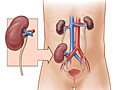
To do the surgery, the doctor makes a cut (incision) in your lower belly. The doctor places the donated kidney in your lower belly. Your own kidneys are not taken out unless they're causing problems. Then the blood vessels of the new kidney are connected to your blood vessels. The doctor also connects the ureter of the new kidney to your bladder. (A ureter is the tube that carries urine from the kidney to the bladder.) Then the incision is closed with stitches or staples. The incision will leave a scar that will fade with time.
You need only one healthy kidney to live. The new kidney can do the work that your own kidneys can't do. It will remove waste from your blood. It will keep your body's fluids and chemicals in balance. Your new kidney may start to work very soon after surgery, or it may take a few weeks. If your kidney doesn't start to work right away, you will need to have dialysis until the new kidney can take over.
You will probably spend several days in the hospital.
Most people need to take several weeks or longer off from work. It depends on the type of work you do and how you feel.
What To Expect
What To Expect
Within a few days, you may start to feel much better than you did before. But you may have some pain or soreness in your belly or side.
It may take time for your new kidney to produce urine. So you may have to receive dialysis and take medicines, such as diuretics.
Most people go home from the hospital within several days after surgery. It will probably take several weeks or longer before you can get back to your job or usual activities.
After the transplant, you'll have to take medicines every day from now on. The medicines will help keep your body from rejecting the new kidney. They will also make your immune system weaker. This means you will be more likely to get an infection or become sick. To reduce your risk of infection, wash your hands often. Stay away from crowds of people, and avoid contact with people who have a cold or the flu.
Watch
Why It Is Done
Why It Is Done
Kidney transplant surgery is done so that a healthy kidney (donor kidney) can do what your diseased kidney can no longer do. Kidney transplant is used when you have severe chronic kidney disease (renal failure) that cannot be reversed by another treatment method. You will not be able to have this surgery if you have an active infection, another life-threatening disease such as cancer, or severe heart or lung disease.
How Well It Works
How Well It Works
If you have severe chronic kidney disease and choose to have a kidney transplant, you may live longer than if you choose to treat your kidney disease with dialysis alone.
In the past, a kidney from a relative with a matching blood type worked best. But with anti-rejection (immunosuppressive) medicines, kidneys from people you aren't related to work well too.
The success of a kidney transplant may depend on:
- Your overall health. After the transplant, it's important to have a healthy lifestyle. This includes eating healthy foods and being active. Don't smoke, vape, use other tobacco or nicotine products, or drink alcohol.
- Whether you take your medicines as prescribed. Anti-rejection medicines must be taken every day from now on.
- Finding and treating any signs of organ rejection early. This makes it more likely that your new kidney will stay healthy. That's why it's important to go to follow-up appointments and get regular tests to make sure the new kidney is working well.
Risks
Risks
The risks of having a kidney transplant include:
- Rejection of the new kidney.
- Bleeding during and after the surgery.
- Infection. The medicines you'll need to take to help your body accept the new kidney can also make it harder for your body to fight infection.
- Failure of the donor kidney to work as it should.
- Certain cancers, such as skin cancer. This risk increases because anti-rejection medicines can also prevent the body from attacking cancer cells.
This information does not replace the advice of a doctor. Ignite Healthwise, LLC, disclaims any warranty or liability for your use of this information. Your use of this information means that you agree to the Terms of Use. Learn how we develop our content.
To learn more about Ignite Healthwise, LLC, visit webmdignite.com.
© 2024-2025 Ignite Healthwise, LLC.
Related Links
Organ Transplant
<cipublic-spinner variant="large"><span>Loading…</span></cipublic-spinner>